In today’s fluctuating markets, aligning operations with real-world demand shifts is essential for business success. Demand volatility is now influenced by external factors like economic conditions, seasonality, and even social media trends, creating new pressures on production, distribution, and inventory planning. However, predictive analytics and AI-driven forecasting are transforming how companies handle these challenges. Through the example of Thane, a global leader in direct-to-consumer marketing, we explore how predictive forecasts empower organisations to make agile, informed decisions, ultimately driving better operational efficiency.
The Limitations of Traditional Demand Forecasting
Historically, demand forecasting has heavily relied on historical sales data and general trends. While this approach provided a foundation, it falls short as market complexities grow. In fact, a study by the Aberdeen Group found that 63% of companies cite inaccurate forecasts as a primary reason for missed revenue targets. Common forecasting limitations include inconsistent methods, unreliable CRM data, and unpredictable buyer behaviour. Furthermore, research from Gartner shows that sales forecasts can be off by as much as 28%, which impacts revenue, resource allocation, and customer satisfaction.
However, AI and predictive analytics address these challenges by incorporating both historical data and real-time information, significantly enhancing forecast accuracy. McKinsey estimates that AI-driven forecasting can reduce forecasting errors by 20-50%, resulting in potential inventory cost savings of up to 20%—an impact particularly notable in industries with perishable goods.
Thane’s Journey with Predyktable’s Predictive Forecasts
As a global leader in multi-channel marketing, Thane serves millions worldwide through TV, e-commerce, and social media. Predyktable collaborated with Thane to assess external factors influencing their demand, allowing them to shift from reactive to proactive planning. By focusing on key factors like economic fluctuations, seasonal demands, and consumer trends, Thane has been able to tailor its approach to production, distribution, and resource allocation.
During Hurricane Milton, sales in several U.S. states saw dramatic shifts, as highlighted in the table below. States directly impacted by the hurricane and associated flooding, such as Florida and Texas, experienced sales drops of up to 50% compared to their usual averages. For example, Florida’s average sales during the hurricane were 7.45%, down from the usual 9.70%. Similarly, Texas dropped from 8.34% to 5.53%. Whereas the other states not impacted by the external weather events maintained an increase in sales.
Thane’s Ecommerce sales during Hurricane Milton
10/10/24
11/10/24
12/10/24
13/10/24
14/10/24
Average Sales
Normal Average
State
CA
14.12%
10.45%
12.26%
15.71%
12.63%
13.04%
13.25%
FL
8.24%
7.46%
8.49%
5.71%
7.37%
7.45%
9.70%
NY
7.06%
5.97%
9.43%
5.71%
5.26%
6.69%
6.13%
TX
4.71%
2.99%
7.55%
7.14%
5.26%
5.53%
8.34%
VA
0.00%
5.97%
1.89%
4.29%
2.11%
2.85%
2.98%
WA
1.18%
5.97%
0.94%
0.00%
0.00%
1.62%
2.32%
PA
1.18%
1.49%
1.89%
2.86%
5.26%
2.54%
3.96%
IL
3.53%
5.97%
2.83%
3.57%
4.21%
4.02%
3.39%
CO
1.18%
5.97%
2.83%
0.71%
2.11%
2.56%
2.06%
MA
0.00%
1.49%
0.94%
3.57%
6.32%
2.46%
2.63%
Predyktable’s consultancy showcased how incorporating external data—like weather patterns, economic events, or social disruptions—into forecasting models allows businesses to anticipate and mitigate risks more effectively. By understanding these trends, Thane has shifted from reactive to proactive planning, using predictive forecasting to adjust resource allocation and minimise losses during disruptive events.
Thane’s updated forecasting approach now accounts for external factors, enabling them to respond dynamically to market changes. For instance, they can adjust spending in affected regions, reallocate inventory, and better manage their operations during unforeseen circumstances. This strategic agility not only ensures Thane remains resilient in the face of external events and gains improved accuracy but also strengthens their ability to act on insights, ensuring preparedness for future challenges.
“Partnering with Predyktable has transformed our approach to strategic planning. With their expertise and advice, we can confidently make data-backed decisions on resource and budget distribution. This agility helps us not only meet current demand but anticipate shifts in consumer needs before they arise.”
Tangible Benefits of Predictive Forecasting
Using AI and automation to predict and adjust demand in real time, provides businesses with the insights and recommendations to:
Reduce labour costs by up to 15%
Cut inventory waste by up to 10%
Increase sales opportunities by up to 10%
Adapt swiftly to market changes
The Future of Demand Forecasting
Predictive forecasting is no longer optional but essential for businesses wanting to stay competitive in uncertain times. Thane’s success with Predyktable’s AI-driven forecasts illustrates the strategic value of moving beyond traditional forecasting methods. By anticipating demand shifts and adjusting accordingly, companies can narrow the gap between predicted and actual outcomes, reduce waste, and enhance customer satisfaction.
As Thane has demonstrated, predictive forecasting isn’t just a powerful tool—it’s a business imperative.
In today’s rapidly changing world, businesses are increasingly focused on sustainability, not just as a corporate responsibility but as a strategy for long-term viability. One of the most significant areas where this shift is taking place is in demand forecasting. Demand forecasting for sustainable business practices uses AI and data analytics to anticipate market needs, helping companies optimise resources, reduce waste, lower their environmental impact and reduce costs.
The Environmental Impact of Overproduction and Waste
According to the Food and Agriculture Organisation (FAO), nearly one-third of the food produced globally is wasted. This staggering amount of waste is not only a humanitarian issue but also a major environmental concern. Overproduction leads to wasted energy, resources, and increased carbon emissions.
One of the primary reasons for this waste is inaccurate demand forecasting. Many businesses still rely on outdated methods that result in either overstocking, which leads to excess products being discarded, or underproduction, which can lead to lost revenue and unsatisfied customers. This mismatch in supply and demand creates unnecessary environmental burdens.
How AI Enhances Demand Forecasting for Sustainable Business Practices
Artificial Intelligence (AI) has the potential to revolutionise demand forecasting for sustainable business practices by providing highly accurate predictions based on vast amounts of real-time data. Through AI-driven predictive analytics, companies can better align production with actual demand, reducing excess inventory and minimising waste.
Predictive analytics in demand forecasting offer several key benefits for sustainability:
Reduced Waste: By forecasting more accurately, businesses can produce what is needed, when it’s needed, preventing excess stock that could end up in landfills.
Lower Energy Consumption: Managing large inventories requires energy for warehousing, climate control, and logistics. AI-based demand forecasting ensures that these resources are used more efficiently.
Conservation of Natural Resources: Every product that is overproduced uses raw materials, water, and energy. Accurate forecasting ensures that companies only use the resources necessary for current demand.
Lower Transportation Emissions: With optimised supply chains, fewer products are transported unnecessarily, which means reduced fuel consumption and lower carbon emissions.
The Role of AI in Transforming Supply Chain Logistics
Logistics and supply chain management are also undergoing significant changes thanks to AI-driven demand forecasting for sustainable business practices. Studies show that even a 1% improvement in forecast accuracy can lead to a 10-15% reduction in inventory costs. For businesses, this means fewer overstocked goods, lower energy usage in distribution, and a significant reduction in transportation-related emissions.
With predictive demand planning, logistics companies can streamline their operations, using fewer trucks, planes, or ships to transport goods. This leads to fewer carbon emissions and a smaller ecological footprint.
GenAI and the Future of Sustainable Demand Forecasting
The rise of generative AI (GenAI) also plays a key role in sustainable demand forecasting. With advanced capabilities to process data and generate forecasts based on consumer behaviour, businesses can make informed decisions that reduce their environmental impact. In highly regulated industries, such as pharmaceuticals or food production, GenAI can predict demand with remarkable accuracy, ensuring that goods are neither overproduced nor wasted.
The implementation of AI in demand forecasting for sustainable business practices is not just a trend but a necessity for companies striving to improve their sustainability efforts.
Conclusion: The Need for Sustainable Demand Forecasting
Incorporating AI into demand forecasting is a powerful step toward more sustainable business practices. The potential to reduce waste, lower energy consumption, and optimise resources makes AI-driven demand planning a valuable tool for businesses looking to make a positive environmental impact.
Predyktable is committed to helping companies integrate AI-driven demand forecasting into their operations, ensuring they meet sustainability goals while maintaining profitability. By leveraging these advanced tools, businesses can make every percentage point count, minimising waste and treading more lightly on the planet.
Prediction can be a hard problem to solve and, oftentimes, even un-solvable. When discussing honesty in prediction models, we need to recognise the challenges of modelling complex systems. How many times have we seen articles about some financial market, be it housing, stock or crypto predicting some behaviour, and yet the opposite happens. For the sports fans out there, it is clear that no matter how much you watch a sport or how much information you have gathered and taken into account, surprises still happen. Just think of Greece’s victory over Portugal at the 2004 Euro’s or Paul the Octopus’s uncanny football predictions!
That is because life happens, the world is full of chaos and unless we are modelling some physical laws of nature it’s pretty hard to predict. This chaotic nature of the world makes honesty in prediction models even more critical. It’s important to acknowledge that forecasting isn’t always precise, and we should embrace transparency in the process. This is both a bit scary but also very exciting. It is the reason I moved from a purely mechanical focused career where you could calculate the right answer, to something a bit more open ended. It means that if you can predict something of value, it is worth doing, and it can set you apart. But it is hard.
I am not going to go into how to predict things, or even why somethings are easier to model than others, there are already plenty of very good books on that subject. But I am briefly going to focus on why it is important to be honest with ourselves, that this can be a tricky process, there isn’t always enough signal, sometimes things don’t work, but all of that is okay. And what I think is important is cultivating an environment where we are honest about our ability, for it to be okay for things to not work and to share our failings along with our successes, the more we are comfortable with these aspects I believe the better things can be.
Belief in Possibility: The Attitude of “Yes, We Can”
I grew up in South Asia and one of my favourite cultural observations when compared to the UK was attitude to repair. If you had a device that had broken, and you took it a shop and asked about repair, the answer was almost always “yes, no problem”, almost always things could be repaired. On some occasions perhaps things wouldn’t quite come back the same, but in the UK, it feels like the response is almost always “Sorry, it looks like a write off, better to just get a new one”. Now I am not going to comment on attitudes to disposability or access to goods etc. I am aware there are many factors at play. But it feels like that the response was always one of belief and acceptance, “Yes we can do it.”
I love this, but it certainly has its place. I have had the fortunate experience to work under some real believers, this certainly provides many positives, however it did mean that anytime someone asked if our team could deliver something the answer would almost always be, yes (think Jim Careys Carl from yes man), a behaviour I am certainly guilty of myself.
I think there was however a very noticeable difference between making build promises from an engineering capability vs analytical perspective. Saying yes to building a new endpoint or platform functionality is very different to saying yes to building a model that is X% accurate or delivers £X value. From an engineering perspective I am comfortable with the idea of what I can and cannot build, sure there will always bumps along the way, but can it be built? I feel I can answer that. But in the analytical space it is a whole other story, it is why you see stories like Even After $100 Billion, Self-Driving Cars Are Going Nowhere, and issues like stops signs to the right, building predictive models is considered experimentation for a reason.
We don’t know what results we can get; we may be able to get a good idea, but promising beforehand or working to specific target metrics without exploring and iterating is not ideal, and there can be so many unknown factors and outliers at play. So we should be open about this, say “yes there are possibilities and things we can explore”, but we need to iterate, try things out, only then can we start thinking about deliverables and saying what we will achieve, even then delivery needs to be structured in a way that allows for experimentation (as briefly discussed below).
This process and mind set should be a good thing, after-all it leads to less broken promises, less stress & anxiety and fewer moments for your data scientists ending up working late in the night asking themselves ‘why won’t some model just work’.
That’s why, at Predyktable, we prioritise fostering an honest dialogue about what’s achievable. We explore, iterate, and refine our approaches, recognising that the path to innovation is marked by valuable learning moments. By embracing experimentation, we minimise the pressure of over-promising and under-delivering. Being transparent about our limitations and effectively managing expectations is crucial to upholding honesty in prediction models. This approach ensures that all stakeholders are aligned with realistic outcomes rather than being misled by overly optimistic projections.
It’s OK to Stop: Avoid the ‘Pot Committed’ Trap
So sometimes it does happen, you’ve built it up to your stakeholders, spent ages learning new frameworks, got more data, burned through resource hours and you are still not getting results. For those that don’t play poker, being pot committed is the act of having “put in so many chips”, or otherwise risk of consequence, that you might as well follow through with the plan. But this should never be the case, you shouldn’t be afraid to stop, and it should be acceptable.
Earlier in my career whilst working in Insurance I had been supporting some analysis for price elasticity, we had conducted price tests to see how consumers would react to higher and lower prices i.e. would we get more demand? could we generate more margin? We spent a reasonable time on the piece, but our result was that we don’t have enough data, and we will probably never have enough data given our position in the market. We had to present these results at a steering committee meeting to the senior leadership team of the company including the CEO. Obviously earlier in your career (and perhaps at any stage) this can be quite intimidating; “Uhh we can’t really tell anything; all of this has been a bit of a waste of time” is not the ideal message. But I remember how accepting the committee were and how supportive my manager was in delivering the message. It was very formative of my outlook in being confident in the truth, owning it and creating a space for it around me with the people that I work with and those that I manage.
I think perhaps a key take away is how to recognise that point earlier within the work we are doing, to stop wasting resources down fruitless rabbit holes. It isn’t entirely avoidable, we humans like our challenges. There are lots of frameworks to help this, but the key for me is small quick iterations and evaluations, how much improvement are we seeing for the work we are putting in, we know there is going to be diminishing returns somewhere and identifying that earlier is gold.
The Importance of Honesty in Prediction Models: Embracing the Value of Experimentation
If there is such a degree of uncertainty about data science, you may ask, how are we meant to plan and deliver effectively. There are many different models that companies have employed see Models for integrating data science teams within organizations for some additional reading. However I went to a great talk by Nick Jakobi in one of the Pydata Meetups where he talked about delivery within agile frame works. He spoke about the idea that experimentation as a task had the aim of answering a question. Can we predict this, does this show this etc. The key thing was that whatever the answer the results of the experiment was still delivery of information, and that information was inherently valuable and should be deemed so.
For example, let’s say you are working on improving a forecasting model, and after spending a sprints worth of work on it, you simply cannot make any significant improvements to the performance of a model. In this case you have learned that very fact that given the provided effort model improvements are not feasible, at this point in time. And that learning is valuable, I believe they used a knowledge base to enter the result of each learning and task so that that it was easy to access and allowed them to learn globally about what works and what doesn’t. At Predyktable, we view every learning as an important step forward, and we ensure these insights are captured and shared to benefit the entire team.
Show me your code
By being okay with failure and cultivating a sense of honesty and trust we can alleviate so many issues before they arise, but again this is difficult. Most will have seen Elon Musk asking all his engineers to show him their ‘most salient lines of code’ as he goes about his firing spree. I am sure this would evoke a bit of fear in those who wish to stay.
As with many industries there is an epidemic of imposter syndrome within tech this can breed a reluctance to show and share code and low level results, especially with the analytical domain. But again, cultivating the ability to be honest and open for challenge and review, (what we would expect in academia) and just reach out about where we are struggling also helps to alleviate this and can mitigate against this.
You will still see some scenarios like what we saw with the covid modelling by the Imperial University, where external validation was not able to take place initially causing some concern or models like the re-offending prediction used in the US where predictions are used that impact people sentencing but there is a strong reluctance to show process of getting there.
So instead of imitating Col Jessup from A Few Good Men, and maintaining ‘you can’t handle the truth’, we should be leaning towards Fletcher Reed from Liar Liar (again Jim Carey), in building an environment where we can be honest with each other, which should really be beneficial for all involved.
Creating a Culture of Honesty and Trust
In tech, imposter syndrome is rampant, and the reluctance to share code or low-level results can be real. But at Predyktable, we cultivate a culture where openness and honesty are valued. Sharing both successes and struggles, seeking feedback, and validating models externally are all critical to building trust within the team and with our clients.
We don’t believe in hiding behind processes or pretending everything is perfect. Instead, we embrace the mindset that honesty—about both challenges and achievements—benefits everyone involved.
At Predyktable, we value transparency and embrace honesty in prediction models. By fostering this culture, we deliver better results for our clients while creating a supportive and collaborative work environment.
As a data science startup, we were thrilled to partner with a major services provider in the food and beverage (F&B) industry. Our mission? To build a predictive maintenance model using LLMs that could accurately forecast equipment failures and maintenance requirements in the near future – allowing the service provider to streamline their operations. Initially, we focused on leveraging the structured data at our disposal. We crafted a classical machine learning model, carefully engineering features from historical maintenance records, equipment specifications, and external factors like weather, regional events, and their impact on F&B consumption. While this model had great performance metrics, we were determined to push the boundaries further. Our attention turned to the treasure trove of unstructured text data nestled within service technicians’ notes to enhance our predictive maintenance model using LLMs. Could these notes hold the key to unlocking even greater predictive power?
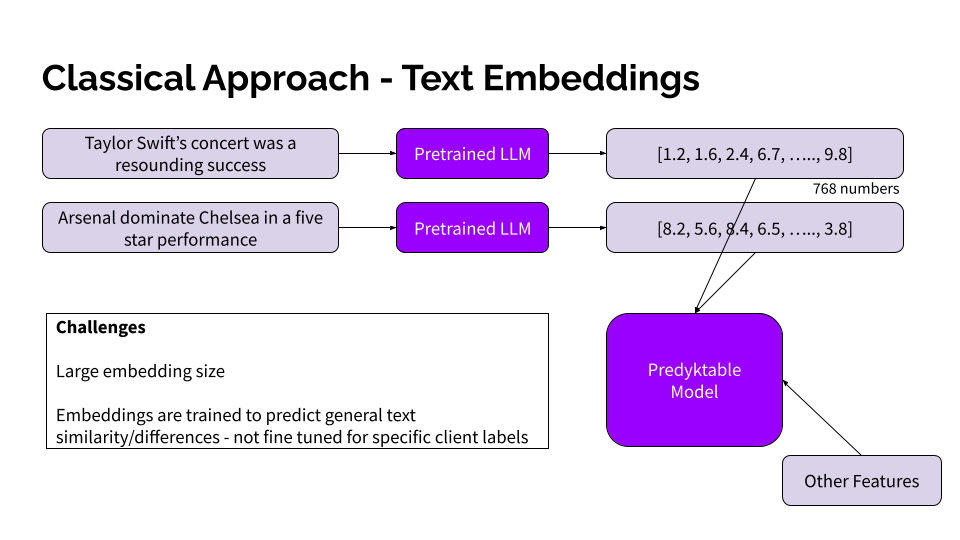
That’s when Large Language Models (LLMs) entered the scene. By now, we’ve all interacted with LLMs in some capacity. We have witnessed their tremendous prowess at generating new text, images and even videos. However, LLMs extend far beyond just text generation; they play a crucial role in building predictive models by generating text embeddings.
LLMs are deep learning algorithms trained on massive datasets of text and code, allowing them to understand and generate human-quality text. A key capability of LLMs is their ability to generate “embeddings,” which are essentially numerical representations of words, sentences, or even entire paragraphs. Imagine you have two sentences: “Taylor Swift’s concert was a resounding success” and “Arsenal dominate Chelsea in a five-star performance”. While these sentences differ greatly in content, LLMs can convert them into numerical vectors (embeddings) that capture their underlying meaning. These embeddings would highlight the “positive sentiment” shared by both sentences, albeit in different contexts—one musical, the other athletic.
These embeddings become incredibly powerful tools for analysing unstructured text data, identifying patterns, and uncovering hidden relationships. Since the embeddings are just numbers, they can be fed into classic machine learning models like any other features and could allow the model to derive insights from the text data.
Classical Approach: Text Embeddings and Their Limitations in Predictive Maintenance Model Using LLMs
Our initial approach involved using pre-trained LLMs to generate embeddings for the client’s service notes. These embeddings, often hundreds of numbers long, captured semantic information about the text. We then fed these embeddings into a predictive model along with other relevant features to estimate the likelihood of high maintenance needs at each location.
While conceptually sound, this approach faced challenges:
Large Embedding Size: The high dimensionality of the embeddings increased model complexity and computational costs.
Not Specific to Client Data: Pre-trained LLM embeddings are optimised for general language understanding and might not accurately capture the nuances specific to our client’s industry and operational context. In the above example, the embeddings haven’t been specifically trained to relate text to high maintenance needs in the F&B industry.
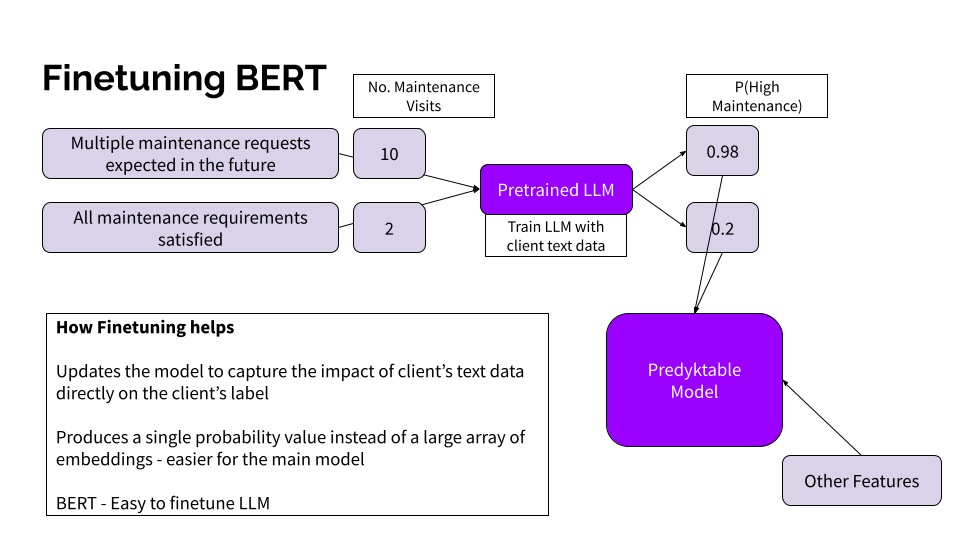
Enter Fine-Tuning: Tailoring LLMs for Specific Tasks in Our Predictive Maintenance Model Using LLMs
Fine-tuning offers a solution to the above challenges by further training an already powerful LLM on a specific dataset and task, such as classifying F&B service notes. The pre-trained LLM is trained using the client’s specific data. In this case, it’s the service technicians’ and agents’ text notes along with their corresponding maintenance outcomes (how many hours of maintenance tasks are needed in the future). This training aligns the model’s understanding of language directly with the client’s terminologies and context.
Challenges with the Client Data
All Large Language Models (LLMs) have a limit on the number of words (tokens) they can process as input. Larger LLMs, like Google Palm, can handle more tokens but are harder to fine-tune due to their size. Smaller LLMs, like BERT, can process fewer tokens but are easier to fine-tune with new data.
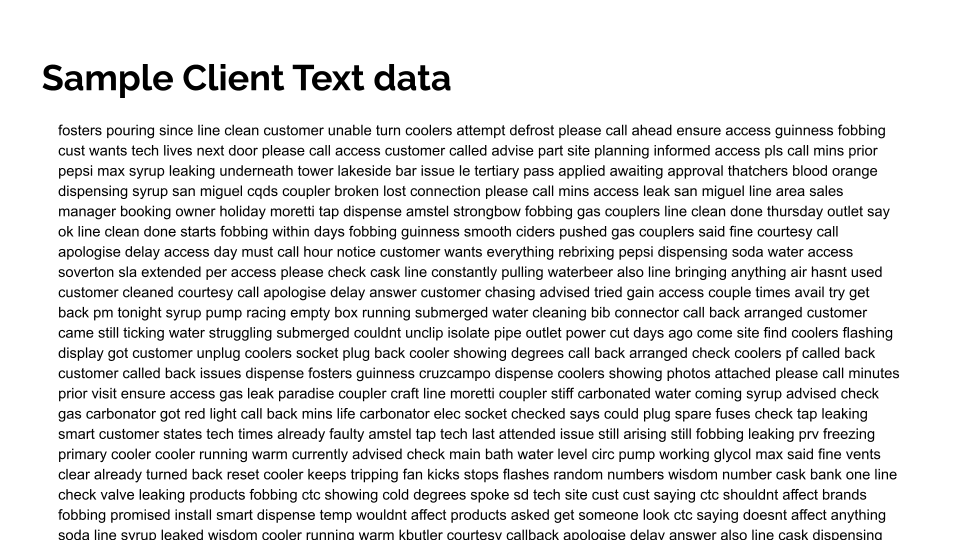
The client data we were working with was enormous—it included all service provider notes from across a geographical area for the past week. The following image shows a sample of this data:
This data presented us with two challenges:
The input data size was quite large and could not directly be used as an input to easy-to-finetune LLMs like BERT.
The data seemed quite gibberish and it seemed quite improbable that directly finetuning an LLM using this data would have any value.
In the following sections, we will explain the two-stage process used to address these issues.
A Two-Step Solution: Summarisation and Fine-Tuning with BERT
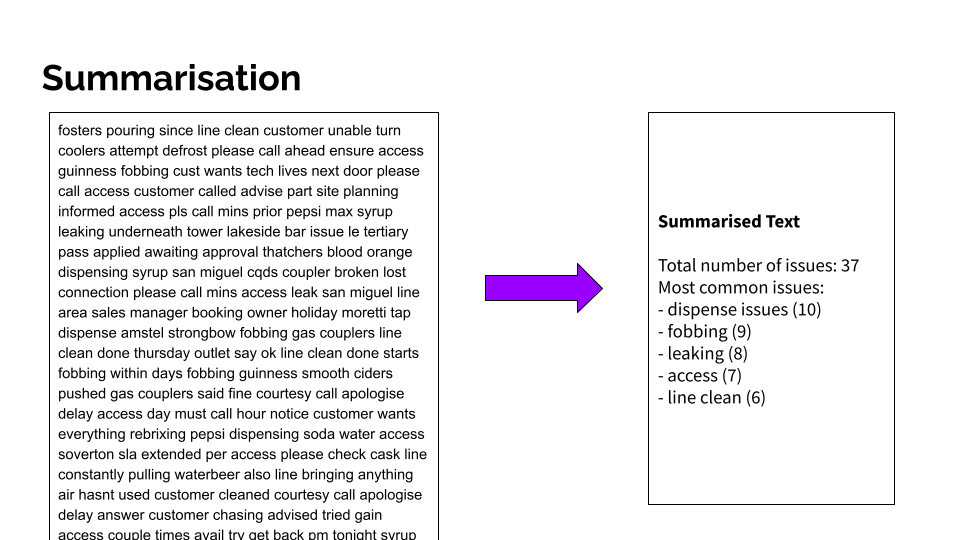
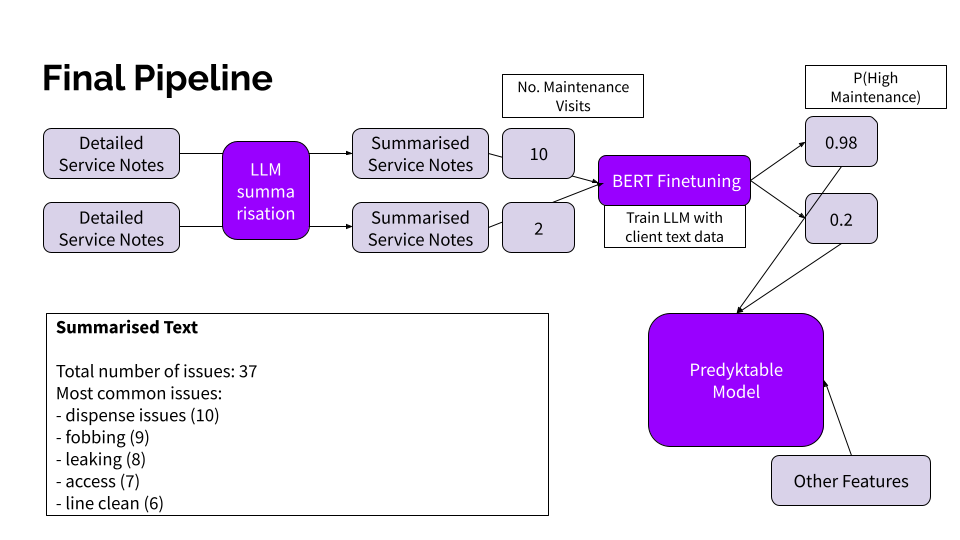
Step 1: Summarisation: We utilised a large LLM like Google Palm to summarise the lengthy and detailed service notes into concise, information-rich summaries. These summaries focused on extracting the total number of maintenance issues and different types of issues faced by the outlets in the area, significantly reducing the text volume without sacrificing crucial information.
Step 2: Fine-Tuning BERT: Summarisation created a succinct view of the different types of issues faced in a particular area in the past week. This text was extremely relevant for predicting the expected number of maintenance requests in the future. The second step involved capturing this dependency by finetuning a BERT model. BERT (Bidirectional Encoder Representations from Transformers) is a versatile and powerful language model that is relatively easy to train on new data due to its small size.
The overall process is captured in the following diagram:
Promising Results
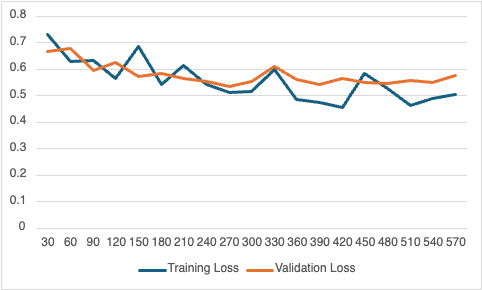
We observed a strong correlation of 0.65 between the P(High Maintenance Needs) score generated by BERT and the actual number of maintenance visits at each location. This indicated that the BERT model, after fine-tuning, was successfully learning from the client’s service note data and translating it into meaningful predictions. The plot below illustrates the reduction in both training and validation loss over epochs (iterations) during the fine-tuning process, highlighting the effectiveness of our approach in making the BERT model better at its predictive task.
This solution offered a more precise and efficient approach for leveraging unstructured text data. By fine-tuning BERT, we successfully bridged the gap between general language understanding and our client’s specific business context. This project highlights how a predictive maintenance model using LLMs can effectively leverage unstructured data sources, like free-text call notes, can be harnessed to improve field service operations and deliver a superior customer experience.
Learn more about how a predictive maintenance model using LLMs can transform your business operations – Contact us today!
The contemporary supply chain landscape faces a multitude of challenges. Disruptions like labour shortages and geopolitical tensions create obstacles in delivering products efficiently. Accurate demand planning in the supply chain is crucial in this environment, allowing businesses to optimise inventory levels, prevent stock-outs, and adapt to market fluctuations. Predictive analytics takes this a step further by leveraging data and advanced algorithms to generate more precise forecasts.
Traditional vs. Predictive Demand Planning in the Supply Chain:
Data Sources: Traditional methods rely primarily on historical sales data and basic statistical models. Predictive analytics incorporates a broader range of data sources, including:
Internal sales history
World economics
Local and global events
Weather and seasonality
Forecast Accuracy & Horizon: By analysing a richer data set, predictive analytics generates more nuanced forecasts with greater accuracy. Additionally, it can extend the forecasting horizon, enabling businesses to plan further into the future.
Risk Management & Opportunity Identification: Predictive analytics can uncover hidden trends and potential disruptions in the data that traditional methods might miss. This allows for proactive risk mitigation and the identification of new sales opportunities.
Scenario Planning & Decision-Making: Predictive models can be used to simulate various scenarios, such as the impact of a marketing campaign or competitor actions on inventory needs. This data-driven approach empowers businesses to make informed decisions about resource allocation, production planning, and inventory management.
Automation & Efficiency: Predictive analytics can automate repetitive tasks associated with demand planning, freeing up human planners to focus on strategic initiatives.
The Benefits of Implementing Demand Planning in the Supply Chain:
Enhanced Forecast Accuracy: Improved forecasts lead to better inventory management, reduced stock-outs, and increased customer satisfaction.
Proactive Risk Management: Early identification of potential disruptions allows for the implementation of contingency plans, minimising negative impacts.
Data-Driven Decision Making: Businesses can make strategic choices based on a deeper understanding of customer behavior and market trends.
Improved Supply Chain Efficiency: Streamlined inventory management and proactive risk mitigation lead to a more efficient and resilient supply chain.
Conclusion:
Predictive analytics is not a silver bullet, but a powerful tool that can significantly improve demand planning accuracy and supply chain efficiency. By leveraging a wider range of data sources and sophisticated algorithms, businesses can gain a deeper understanding of customer behavior and market dynamics. This empowers them to make data-driven decisions, optimise operations, and gain a competitive edge in today’s challenging supply chain environment.
London, April, 2024 – Predyktable, a pioneering provider of predictive analytics solutions, proudly announces the appointment of retail industry veteran Steven Hubbard as a Board Advisor. Hubbard’s extensive experience and innovative vision will further propel Predyktable’s strategic growth initiatives and reinforce its position as a leader in predictive demand forecasting.
Who are Predyktable?
Predyktable is a UK based AI startup. They provide customisable cloud-based demand forecasting services for Retail, Hospitality, Facilities & the Food Services sectors. In addition, they serve as a valuable resource for solution providers serving these industries, offering actionable insights. By empowering businesses and solution providers to make informed decisions on staffing levels and inventory management, they drive operational efficiency and sustained profitability.
Growth at Predyktable
Predyktable has experienced rapid growth, expanded its client base and partnerships, and enhanced its predictive analytics offerings. With a focus on innovation and customer success, Predyktable continues to push the boundaries of predictive analytics, providing cutting-edge solutions that help businesses in an ever-increasing cost-conscious economy.
The appointment of Steven Hubbard as a Board Advisor represents a strategic move to leverage his expertise and leadership to drive the company’s growth agenda.
About Steven
With over three decades of retail strategy, operations and technology expertise, Steven Hubbard joins Predyktable’s advisory board, bringing invaluable insights to the team. Hubbard’s extensive career spans multi-category, multi-channel luxury and mainstream international retail businesses, including roles with major brands such as M&S, Next, Debenhams, and Arcadia. His leadership journey continued with the establishment of Sit up TV, a pioneering multi-channel retail concept in Europe, where he achieved remarkable growth, leading to its successful sale in 2005.
Hubbard’s international endeavours expanded as he ventured into the Middle East, India, and North Africa, serving as the General Manager of Landmark Group. He drove significant brand expansions, including New Look, Reiss, Kurt Geiger, and Koton, achieving notable success and earning recognition as ME Retailer of the Year in 2007. Following this, Hubbard’s entrepreneurial spirit led him to CEO positions at Diva International and the Halo Group, where he spearheaded global expansions and innovative retail concepts, generating substantial revenue and EBITDA.
Now, with a wealth of knowledge acquired from working across more than 30 markets globally, Hubbard joins Predyktable as a Board Advisor, poised to contribute his strategic vision and industry acumen to drive the company’s growth and innovation in predictive analytics and demand forecasting.
Steven Hubbard, Board Advisor, expressed:
“With the ever growing challenges of driving profitable businesses in the UK and Internationally there is a constant need to utilise innovation and insight to add immediate value, which is why I am excited to be joining the Predyktable experienced and talented team as they progress on a significant growth journey working in true partnerships to support a number of service driven companies in becoming more efficient and effective in their various markets”
Phillip Sewell, CEO and Co-Founder of Predyktable also commented:
“We are thrilled to welcome Steven to our team. With his proven track record in scaling and running businesses, alongside his expertise in expanding international presence, we’re poised for remarkable growth ahead. We look forward to his invaluable contributions as we continue to expand our innovative business.”
Contact Predyktable
For more information about Predyktable and its groundbreaking platform, visit https://predyktable.ai/
As the CEO of a predictive analytics company, I have seen first-hand the immense pressure facing the hospitality sector. Staff shortages, rising costs, and the ever-growing need for sustainability are creating a perfect storm that threatens to capsize even the most established businesses.
In this blog we explore how predictive demand forecasting can help businesses effectively navigate these challenges.
The big “4” challenges and the solutions
1. Staff Shortages and Retention:
A staggering 92% of UK hospitality businesses reported staff shortages in Q4 2023, with the situation expected to worsen. (Source: [https://wsta.co.uk/facts-figures/])
Solution: Predictive analytics can help forecast staffing needs based on anticipated occupancy. This allows businesses to schedule more efficiently, avoiding overstaffing during quiet periods and understaffing during peak times. This not only reduces labor costs but also improves employee morale and the overall guest experience.
Solution: Predictive analytics can help businesses optimise their pricing strategies by taking real-time demand and competitor pricing into account. This allows them to maximise revenue without deterring customers by setting prices that reflect market conditions.
Solution: Predictive analytics and predictive demand forecasting can help businesses optimise inventory management by forecasting demand for specific items. This helps in reducing waste and allows businesses to purchase only what they need, leading to lower overall costs.
4. Environmental Considerations:
Consumers are increasingly demanding sustainable practices from businesses, with 78% of UK consumers willing to pay more for sustainable travel and accommodation options. (Source: [https://www.ukhospitality.org.uk/2146-2/])
Solution: Predictive analytics can help businesses optimise energy consumption by forecasting occupancy and room usage. This allows them to implement energy-saving measures more effectively, such as adjusting heating and cooling based on real-time needs. This not only benefits the environment but also helps to reduce energy costs.
Conclusion
In conclusion, the UK hospitality sector is facing a complex landscape in 2024. However, by embracing predictive demand forecasting, businesses can gain valuable insights and make data-driven decisions to navigate these challenges and emerge stronger.
By optimising staffing, pricing, inventory management, and energy consumption, businesses can not only lower operating costs and improve efficiency but also enhance their sustainability and attract environmentally conscious consumers.
Predictive analytics is a powerful tool that can help the hospitality sector weather the storm and chart a course towards success in today’s dynamic market.
Investing in the Future:
Implementing a predictive analytics solution (predictive demand forecasting) might seem like an additional expense at a time when cost reduction is crucial. However, consider it an investment in the future of your business. This technology can be the difference between struggling to survive and thriving in a competitive and ever-changing landscape.
At Predyktable we understand the unique challenges faced by the hospitality industry, and we are committed to providing solutions that are affordable, easy to implement, and impactful. We offer a variety of flexible options to cater to different business needs and budgets.
In a fast-paced and ever-evolving world, accurate demand forecasting is crucial for success. Without it, companies risk stockout, overstocking, inefficient allocation of resources, and ineffective marketing strategies. Traditional methods of demand forecasting, while effective to some extent, are often plagued by inaccuracies and inefficiencies. Enter Demand Forecasting with Predictive Machine Learning (ML), a technology that is revolutionising the way businesses predict and manage demand.
In this blog, we’ll explore how predictive ML models improve demand forecasting and its potential to drive better decision-making in inventory management, and marketing campaigns.
Use Predictive Analytics to Improve demand forecasting accuracy by up to 20%, leading to a 10% increase in profits.
The Challenges of Traditional Forecasting
Traditional demand forecasting methods often rely on historical data and statistical models. While these methods have been useful, they have limitations:
Lack of Real-Time Adaptability: Traditional methods may struggle to adapt to rapidly changing market conditions, making them less effective in dynamic industries. In today’s fast-paced business environment, market conditions can shift in the blink of an eye. Traditional forecasting techniques, rooted in historical data, often lack the agility to respond to these real-time and rapid changes.
Complex Interactions: Demand is influenced by a myriad of variables, including economic trends, consumer behavior, competitive landscapes, and more. Traditional forecasting models often oversimplify or fail to consider the complex interplay between these factors, resulting in less accurate predictions.
Data Volume and Complexity: Traditional methods are less capable of handling vast amounts of data and complex patterns, which are increasingly prevalent in today’s business landscape. The digital age has ushered in an era of big data, where an abundance of information is available for analysis. Traditional forecasting techniques fall short when dealing with the sheer volume and complexity of this data, leading to suboptimal predictions.
Lack of External Data: Traditional methods typically rely heavily on internal historical data. They often lack the capability to integrate external data sources, such as social trends, weather conditions, national sentiment, and economic indicators, which can be instrumental in refining demand forecasts. External data sources can provide critical context and insight into changing consumer preferences and market dynamics.
Predictive machine learning (ML) overcomes these limitations by incorporating external data sources, adapting to real-time changes, and identifying intricate patterns that might escape traditional forecasting methods. This makes predictive ML a powerful tool for businesses seeking to enhance their demand forecasting accuracy in the face of an ever-evolving market landscape.
How Predictive ML Enhances Demand Forecasting
Demand Forecasting with Predictive Machine Learning leverages advanced algorithms, vast datasets, and computing power to improve demand forecasting in the following ways:
Data Integration: ML can incorporate diverse data sources, such as social trends, weather conditions, and economic indicators, into demand forecasting models. This allows businesses to gain a more holistic understanding of factors affecting demand beyond their internal sphere of influence.
Real-time Analysis: ML models continuously analyse data in real-time, enabling businesses to react swiftly to changes in demand patterns and market conditions.
Pattern Recognition: ML excels at recognising complex patterns and correlations in data that may go unnoticed by traditional methods. This means businesses can make more accurate predictions.
Forecast Accuracy: By providing more accurate demand forecasts, predictive ML helps businesses reduce excess inventory and minimise stockout. This, in turn, reduces carrying costs and boosts customer satisfaction. Using ML to drive your demand forecasting can see up to a 20% increase in accuracy. Leading on average to a 10% increase in revenue.
Scenario Analysis: ML can simulate different scenarios, helping businesses make informed decisions about inventory levels, pricing strategies, and production schedules before actually committing the resources to the change.
External Data Integration: Predictive ML has the capacity to bring in relevant external data sources, enriching the forecasting process. These data sources may include social media sentiment, economic indicators, and even competitor activities. This external data provides valuable context, enabling businesses to align their strategies with real-world events and consumer sentiments, ultimately leading to more precise forecasts.
Personalised Marketing: ML segments customers into micro-markets and tailor marketing campaigns to specific customer groups. This results in more effective marketing efforts and improved customer engagement. This allows businesses to better understand where to find their customers, what to offer them, when to offer it, and how to talk to them.
Conclusion:
The inclusion of external data in predictive ML models opens up a world of possibilities for businesses, allowing them to tap into real-time trends and market dynamics that can significantly impact demand. As a result, predictive ML not only provides more accurate forecasts but also equips businesses with the knowledge to proactively adapt to changing conditions and stay one step ahead of the competition.
Contact Us to find out how Demand Forecasting with Predictive Machine Learning can help you!
In today’s lively and interconnected business landscape, the traditional approach to demand forecasting, relying solely on internal data sources like sales history and inventory levels, may fall short of delivering the precision and adaptability needed to stay competitive. To address this, forward-thinking businesses are recognising the immense value of incorporating external data sources into their demand forecasting strategies. These external data sources open up a wealth of insights, empowering companies to make more informed decisions in the realms of inventory management, staff planning, and marketing campaigns.
The advantages of leveraging external data sources in demand forecasting are manifold, but let’s delve deeper into the rationale and benefits of this strategic shift.
Comprehensive Understanding of Demand Drivers:
External data broadens the horizon of knowledge, providing a holistic view of the forces shaping demand. This comprehensive understanding of demand drivers not only empowers businesses to make more informed decisions, but also positions them to navigate the complexities of today’s interconnected and rapidly changing world with greater agility and precision. Some key areas to capture data are;
Economic Indicators:External data sources, such as GDP growth, unemployment rates, and consumer confidence, provide a macro-economic perspective. These indicators can signal shifts in consumer spending patterns and provide a nuanced view of market dynamics. For example, an uptick in GDP growth might indicate increased consumer confidence, signalling potential growth in demand for certain products or services.
Industry Trends:Keeping an eye on industry trends, competitor activities, and regulatory changes is crucial for staying ahead of the curve. External data sources offer valuable insights into market conditions, new product launches, and evolving customer preferences. This knowledge helps businesses anticipate demand fluctuations and seize opportunities that internal data alone often overlooks.
Social Trends: The digital age is providing us with a goldmine of information. External data sources encompassing product reviews, brand mentions, and customer sentiment can be harnessed to monitor consumer sentiment and track emerging trends. This real-time data enables businesses to respond swiftly to shifts in customer preferences.
Environmental Factors: Weather patterns and other environmental variables can significantly impact demand for certain products. For instance, data on temperature and precipitation can help retailers predict demand for seasonal clothing and adjust inventory accordingly.
Holidays and Special Events:External data sources often include holiday calendars and event schedules (e.g. gigs and sports), which can be crucial for demand forecasting.
By considering these external factors, businesses can elevate their strategic planning across various critical facets of operations, notably in the domains of marketing, promotions, and inventory management.
1- Marketing Campaigns:
Precision Targeting: External data sources, such as holiday calendars and special event schedules, offer a roadmap for businesses to plan their marketing campaigns with precision. By aligning promotions with holidays and special occasions, companies can tap into the heightened consumer interest and capitalise on the increased spending that typically accompanies these events.
Real-time Adaptation: Leveraging external data, allows businesses to adapt their marketing campaigns in real time. Monitoring things such as customer sentiment, national mood, and emerging trends, enables rapid adjustments to messaging and content, ensuring campaigns remain relevant and engaging.
Timing and Messaging: Weather patterns and environmental data can influence not only the timing but also the messaging of marketing campaigns. For instance, if a sudden cold spell is expected, a clothing retailer can craft campaigns around the concept of “stay warm” to boost sales of winter apparel.
2- Promotions:
Optimised Promotional Timings: External data sources, including economic indicators, help in pinpointing the optimal times for promotions. During periods of economic prosperity, customers may be more receptive to premium products, making it an opportune time for high-value promotions. Conversely, during economic downturns, value-driven promotions might resonate better with cost-conscious consumers.
Competitor Monitoring: Industry trends and competitor activities can be invaluable for devising competitive promotions. By keeping an eye on what competitors are doing, businesses can craft promotions that offer a compelling edge in the market.
3- Inventory Management Strategies:
Agile Stocking: Weather data is an asset for businesses with seasonal products. It allows them to anticipate fluctuations in demand and stock inventory accordingly. For instance, a ski equipment retailer can prepare for higher demand during the winter season and reduce inventory during the summer months.
Demand-Driven Inventory: By incorporating external data sources into their demand forecasting models, businesses can synchronise inventory levels with projected demand. This not only reduces the risk of overstocking or stock-outs but also optimises working capital by ensuring that capital is not tied up unnecessarily in excess inventory.
In essence, by thoughtfully integrating external data factors into their planning processes, businesses can be more strategic and proactive in their approach to marketing, promotions, and inventory management. This, in turn, enhances their ability to respond to shifts in consumer behavior and market conditions, ultimately leading to improved operational efficiency, cost reduction, and greater profitability. It is a testament to the growing need for businesses to embrace the holistic insights offered by external data sources in navigating the complexities of today’s marketplace.
Benefits of Enhancing Demand Forecasting with External Data:
Improved Accuracy: External data sources supplement internal data by providing a broader context for demand forecasting. For example, by integrating economic indicators, businesses can better anticipate changes in consumer behavior. Similarly, monitoring social trends can reveal emerging patterns that might be invisible within internal data. The result is more precise forecasts, reducing the margin of error.
Reduced Risk: Businesses often grapple with the challenge of stockout or overstocking. External data sources act as an early warning system, signalling changes in demand patterns. For instance, by incorporating weather data, companies can predict demand variations for seasonal products, thereby mitigating the risk of stockout or excessive inventory holding. Economic indicators can help foresee shifts in discretionary product demand, allowing for more agile inventory management.
Better Decision-Making:The integration of external data sources provides a foundation for sound decision-making across various facets of business operations. For instance, demand forecasts can optimise inventory levels, ensuring products are available where and when customers need them. Additionally, these forecasts can guide production planning, aligning business capacity with anticipated demand.
In Conclusion:
The strategic integration of external data sources into demand forecasting represents a transformative imperative for businesses navigating the dynamic landscapes of today’s markets. This paradigm shift offers a comprehensive range of benefits, including enhanced forecast accuracy, operational risk reduction, data-informed decision-making, improved operational efficiency, cost reduction and increased profitability. The ability to swiftly adapt to market changes further solidifies the case for harnessing external data sources, ensuring that businesses not only survive but thrive in an environment where agility, precision, and data-driven insights are the hallmarks of success. It is a testament to the evolving role of data in shaping the future of business, driving resilience, competitiveness, and sustainable growth.
Download our latest insights report, stemming from an in-depth Marketing Survey. Gain a greater understanding of the future landscape of predictive analytics, and its profound implications for businesses in an increasingly data-centric world.
Within this document, we unveil valuable findings obtained through a survey focused on the potential advantages of utilising software capable of accurately forecasting how the national mood impacts customer buying patterns. We garnered insights from more than 100 marketing professionals employed by well-established retail and hospitality brands to assess the level of interest and perceived usefulness associated with this predictive technology.